
Renovation Cost Per Square Foot in London: Price Guide
Renovation cost per square foot in London typically runs from £50 to £450 or more, and the gap between those two figures is almost entirely down to scope and postcode. A cosmetic refresh, new paint, flooring and minor repairs, sits around £50 to £90 per square foot. A full structural renovation with rewiring, replumbing and a kitchen or bathroom rebuild in Chelsea, Kensington or Mayfair can reach £350 to £450 per square foot. Always confirm a fixed price with a local contractor before you set a budget, because labour rates, access and planning rules vary street by street.
Contents
- The real numbers, broken down by scope
- What actually changes the price per square foot
- Why Chelsea, Kensington and Mayfair cost more than Dulwich or Clapham
- Cost by property type: Victorian terrace, mansion flat, new build
- Where a handyman fits into a renovation budget
- How to get an accurate quote for your postcode
- Areas we cover
- FAQ
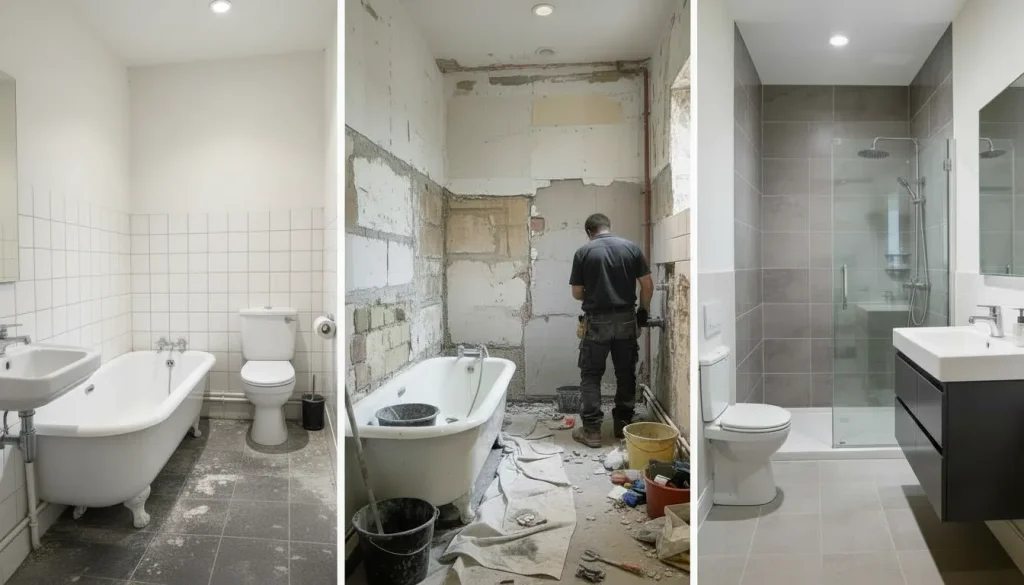
Renovation cost per square foot in London: the real numbers
Quantity surveyors and contractors working across London generally group renovation work into four bands. These are typical ranges reported across the market, not a quote, and your own figure will depend on the condition of the property, the trades involved and how easy the site is to access.
| Scope of work | Typical cost per sq ft (London) | What it usually includes |
|---|---|---|
| Cosmetic refresh | £50 to £90 | Decorating, minor plastering patches, new flooring, fixtures, no structural work |
| Mid-range renovation | £150 to £250 | New kitchen or bathroom, replastering a room or two, partial rewire, new flooring throughout |
| Full renovation (gut to studs) | £250 to £350 | Full rewire and replumb, replastering throughout, new kitchen and bathrooms, some structural work |
| High-end or extension project | £350 to £450+ | Rear or basement extension, listed building consent work, structural alterations, custom joinery |
One square metre is roughly 10.76 square feet, so if a contractor has quoted per square metre, divide by that figure to compare like for like. Flat per-square-foot averages are a useful sanity check on a quote, but they go wrong if the base figure includes garages, lofts or outbuildings that the other party's figure excludes. Ask what area the number is based on before you compare two quotes.
What actually changes the price per square foot
The scope of work matters most, but five other factors move the number more than most homeowners expect.
- Property age. Victorian and Edwardian terraces, common across Clapham, Battersea, Fulham and Dulwich, often hide outdated wiring, no damp proof course and uneven floor joists. These surprises get found once a wall is opened, and they add 10 to 25% to the budget on older stock.
- Access and parking. Streets in Knightsbridge, Mayfair and Belgravia have resident permit zones, loading restrictions and congestion charge implications for trade vans. Scaffolding and skip licences from the local council also cost more where streets are narrow, and that gets built into the day rate.
- Listed building and conservation area status. Parts of Hampstead, Primrose Hill, Holland Park and Notting Hill sit inside conservation areas, where window replacements, rooflines and even paint colours need consent. The consultation process adds time, and time adds cost.
- Party wall agreements. Any structural change touching a shared wall, which is most terraced housing in Islington, Battersea and Wimbledon, needs a party wall surveyor if a neighbour objects. Budget for this separately, it is rarely included in a builder's headline figure.
- Trade day rates by borough. A plasterer or electrician working in South Kensington or Marylebone will generally charge more per day than the same trade working in Croydon or further out, simply because of demand and travel time between jobs.
Why Chelsea, Kensington and Mayfair cost more than Dulwich or Clapham
Renovation cost per square foot in London is not one figure, it is a range that shifts by area. Prime central postcodes, Chelsea, Kensington, Knightsbridge, Mayfair, Belgravia and South Kensington, sit at the top of every band because of higher trade day rates, tighter access and a much higher share of listed or locally listed buildings. A full renovation here regularly lands at £350 to £450 per square foot once structural work, party wall costs and consent processes are included.
Southwest areas with large period houses, Wimbledon, Richmond, Putney, Barnes and Kew, run slightly below that, typically £250 to £350 per square foot for a full renovation, with easier parking offsetting some of the trade day rate.
Mid-range boroughs, Clapham, Islington, Highgate and Dulwich, generally come in at £200 to £300 per square foot for comparable work, and this is usually where you get the most renovation for the money in London.
Canary Wharf is a different case entirely. Most stock is new build, so structural surprises are rare, but leasehold rules and building management restrictions on noisy work or lift bookings can push timelines out, which has its own cost even when the per-square-foot material and labour figure looks lower.
Cost by property type: terrace, mansion flat, new build
The type of property you own changes the figure as much as the postcode does.
| Property type | Typical renovation cost per sq ft | Main cost driver |
|---|---|---|
| Victorian or Edwardian terrace | £220 to £380 | Hidden structural issues, damp, old wiring |
| Mews house | £280 to £420 | Restricted access, often no vehicle route for materials |
| Purpose-built mansion flat | £200 to £350 | Freeholder consent, lift restrictions, working hours |
| New build apartment | £120 to £220 | Fewer structural surprises, but management rules on works |
Mews houses in Knightsbridge and Belgravia are a good example of why per-square-foot figures can mislead: the property is small, so the fixed costs of skip hire, scaffolding and a party wall surveyor get spread over fewer square feet, pushing the per-square-foot figure up even though the total spend might be lower than a bigger house elsewhere.
The most expensive mistake: budgeting from a single per-square-foot number without a condition survey first. Homeowners who take a headline figure, multiply it by their floor area and set that as the fixed budget are the ones who run out of money six weeks in, when the plasterer opens a wall in a 1900s terrace in Fulham or Battersea and finds rotten joists, old lead pipework or no insulation at all. A structural survey or at minimum a schedule of condition before work starts usually costs far less than the change order that follows if you skip it.
Where a handyman fits into a renovation budget
Most full renovations involve a main contractor for the structural work, but a large share of the finishing list, and a lot of the ongoing maintenance either side of the build, is handyman work, not main contractor work. This is where homeowners often overpay by routing small jobs through the main contractor's markup.
Typical examples we see across London renovations: plastering patch repairs once a kitchen wall comes down, a full room of plastering services after a rewire, curtain and blind fitting once the decorators leave, shelving and picture hanging as a final finishing pass, and the inevitable punch list of twenty small snags that a contractor will not return for but that a handyman will clear in a day. For the gap between finishing the build and moving back in, our small jobs and odd job handyman service covers exactly this kind of list, and for the months after, a property maintenance plan keeps the renovation looking like it did on handover day.
If your renovation includes outdoor space, garden decking, guttering replacement or an exterior refresh before a let or sale often gets quoted separately from the main build, and it is usually cheaper done that way.
How to get an accurate quote for your postcode
A per-square-foot figure is a starting point, not a quote. Before you commit a budget, do the following.
- Ask what area the figure is based on: gross internal area or net usable area. A ten percent difference in the base number changes the headline figure noticeably.
- Get an itemised breakdown, not a single lump sum. You want to see labour, materials, waste removal and contingency as separate lines.
- Confirm whether the figure includes VAT. On a mid-range renovation this is a meaningful swing in the total.
- Build in a contingency of 10 to 15% on a property under 30 years old, and 15 to 25% on anything older, particularly Victorian and Edwardian stock across Battersea, Clapham, Dulwich and Fulham.
- Ask whether the contractor is covered for party wall related work if your property shares a structural wall, common across most of terraced London.
- Get at least two quotes from contractors who have worked in your specific borough recently. Pricing in Marylebone or St John's Wood is rarely quoted the same way as pricing further out, and a contractor unfamiliar with local parking and permit rules will often quote too low and revise later.
Areas we cover
We work across prime central London and the wider boroughs, including Chelsea, Kensington, Wimbledon, Knightsbridge, Mayfair, Belgravia, Notting Hill, Holland Park, Fulham, Hampstead, Richmond, Marylebone, St John's Wood, Battersea, Clapham, Putney, Islington, Highgate, Primrose Hill, Barnes, Dulwich, Canary Wharf, Kew and South Kensington. If your renovation needs a handyman for the finishing stage, the garden, or the gutters and exterior, get in touch and we will quote against your specific postcode rather than a national average.
FAQ
How much does it cost to renovate a house in London?
A full house renovation in London typically costs £250 to £450 per square foot depending on the borough, the age of the property and whether structural work is involved. For a 1,500 square foot terraced house that puts a full renovation somewhere between £375,000 and £675,000, though older properties with hidden structural issues can run higher. Always confirm against a local survey rather than a flat average.
What is the average cost per square foot to renovate a flat in London?
Flats generally cost less per square foot than houses because there is no roof or external structure to touch, typically £150 to £300 per square foot for a full renovation. New build flats in areas like Canary Wharf sit toward the lower end, around £120 to £220 per square foot, while mansion flats in Kensington or Marylebone run higher due to freeholder consent requirements and lift access rules.
Is renovation cost per square foot a reliable way to budget?
It is a useful starting point but not a substitute for a quote. Per-square-foot figures assume consistent build quality and no structural surprises, which is rarely true in London's older housing stock. Use the figure to sanity check a quote, not to set a fixed budget, and always add a contingency of 10 to 25% depending on the age of the property.
How much more expensive is renovating in Chelsea or Kensington than in outer London?
Prime central areas including Chelsea, Kensington, Knightsbridge, Mayfair and Belgravia typically run 20 to 40% higher per square foot than comparable work in Clapham, Dulwich or Islington. The difference comes from higher trade day rates, tighter parking and access, and a greater likelihood of listed building or conservation area consent being required.
Does renovation cost per square foot include VAT?
It depends entirely on how the contractor presents the figure, and this varies between quotes. Always ask directly whether a quoted per-square-foot or total figure is inclusive or exclusive of VAT before you compare two contractors, because an exclusive figure can look 20% cheaper on paper while being the same real cost.
Do listed buildings cost more to renovate per square foot?
Yes, usually 15 to 30% more. Listed buildings, common across Hampstead, Primrose Hill and Holland Park conservation areas, require consent for structural changes, window replacements and sometimes even internal alterations, which adds both time and specialist labour cost. Confirm listed status and consent requirements with the local council before budgeting a renovation on this type of property.
How much does an extension add per square foot compared to a renovation?
Extensions generally cost more per square foot than an internal renovation, typically £300 to £450+ per square foot in London, because they involve new foundations, roofing and often a party wall agreement with a neighbour. A simple internal renovation without structural changes will usually sit in the £150 to £250 range for comparison.
Can a handyman service help during a renovation or do I need a full contractor?
Both, at different stages. A main contractor handles structural work, rewiring and replumbing, while a handyman typically covers the finishing list: plastering patches, curtain and blind fitting, shelving, skirting boards, and the snag list a contractor will not return for. Many London homeowners book a handyman separately for this stage because it is quicker and usually cheaper than routing it through the main contractor.
Same day service available
Need a handyman in London?
Fully insured handymen with 10+ years experience. Free quote in minutes, Monday to Saturday 9.00 to 19.00.