
Electric Car Charger Installation London
A standard home electric car charger installation in London costs between £750 and £1,500 for a straightforward 7kW unit fitted close to your consumer unit, and £1,500 to £2,500 or more where the cable has to run a long distance, the consumer unit needs upgrading, or groundworks are involved. The work must be carried out or certified by a registered electrician under Part P of the Building Regulations. In conservation areas, common across Kensington, Chelsea and parts of Hampstead and Richmond, you may also need to check planning restrictions before the unit goes on an outside wall facing the street.
Table of contents
- What electric car charger installation actually includes
- How much does electric car charger installation cost in London
- Do you need planning permission for an EV charger in London
- OZEV grants and current eligibility
- Tethered vs untethered chargers
- How long does installation take
- Questions to ask before you book an installer
- Areas we cover
- FAQ
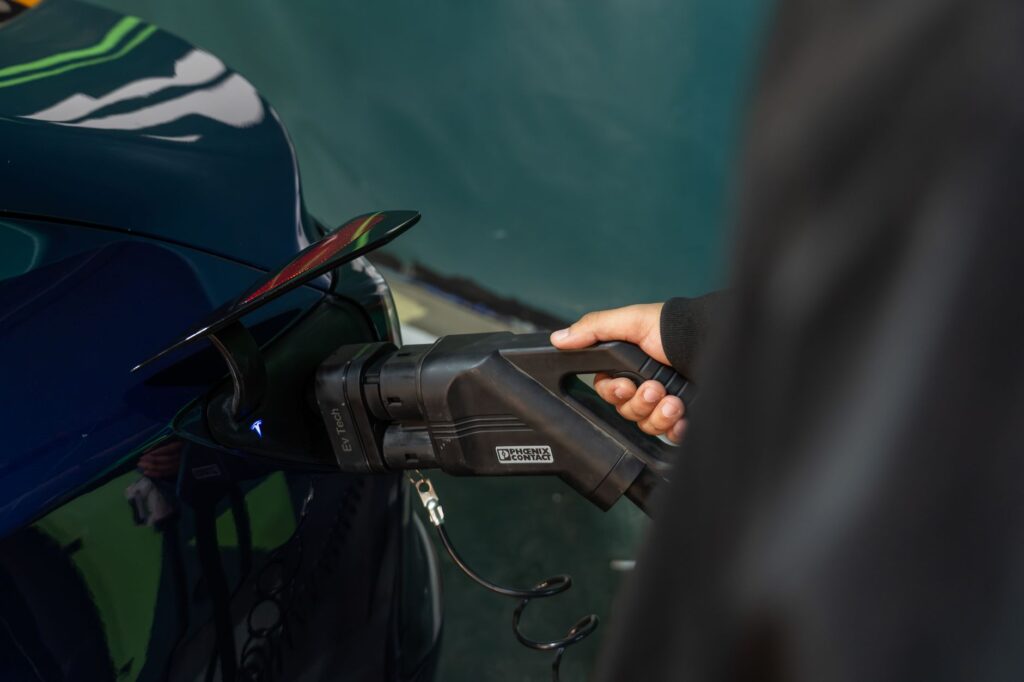
What electric car charger installation actually includes
A domestic EV charger installation is not just screwing a box to a wall. It involves running a dedicated circuit from your consumer unit (or a new sub-board if your existing one is full), fitting an isolator and RCD protection, mounting the charge unit itself, and testing and certifying the whole circuit. If the charger sits more than a few metres from the consumer unit, the cable usually has to be armoured and either clipped along a route or buried, which means some digging or drilling through walls.
Because this is notifiable electrical work under Part P of the Building Regulations, it has to be done by someone registered with a competent person scheme such as NICEIC or NAPIT, or the work has to go through local authority building control separately. We handle the groundworks, cable routing, wall making good and mounting as part of the job, and the certified electrical connection is carried out by our registered electrician partners. Anyone offering a full installation without that certification is cutting a corner that matters at remortgage or sale, when solicitors ask for the Part P certificate.
How much does electric car charger installation cost in London
Price depends mostly on three things: distance from the consumer unit, whether your existing consumer unit has spare capacity, and whether the installer has to notify or get prior approval from your electricity network operator. In parts of central London with older or more constrained local networks, including streets around Belgravia and Mayfair, that notification step can add a short delay but rarely changes the price much.
| Scenario | Typical cost (London) |
|---|---|
| Standard 7kW install, short cable run, consumer unit has capacity | £750 to £1,200 |
| Longer cable run (10m+) or armoured cable through a wall | £1,200 to £1,800 |
| Consumer unit or main earthing upgrade required | add £300 to £700 |
| Groundworks to bury cable under a driveway or path | add £300 to £900 depending on length and surface |
| Three-phase 22kW install (rare in residential properties) | £2,000 to £3,500 |
These are typical ranges, not quotes. Always get a fixed price after a site survey, because the only way to know whether you need a consumer unit upgrade or extra groundworks is to look at the actual wiring and the actual route the cable has to take.
The most expensive mistake: hiring whoever quotes the lowest price without checking they are registered with NICEIC or NAPIT and will issue a Part P completion certificate. We've seen homeowners in Fulham and Clapham discover this only when selling the property, when the solicitor flags the missing certificate and the buyer's lender wants it resolved before completion. Re-certifying or redoing non-compliant work costs far more than the saving was ever worth.
Do you need planning permission for an EV charger in London
Most homes with off-street parking do not need planning permission, because installing a wall-mounted or post-mounted charge point is usually covered under permitted development rights. But there are real exceptions worth checking before you commit. If your property is listed, which is common in parts of Notting Hill, Holland Park and Chelsea, you will likely need listed building consent for any fixing to the exterior fabric, even a small charger. If you're in a conservation area and the unit would face directly onto a street or be visible from it, some boroughs restrict permitted development rights, so it's worth a quick call to the local planning department, particularly in boroughs like Kensington and Chelsea, Westminster and Richmond where conservation area coverage is extensive.
If you rent rather than own, or live in a flat with shared freehold, you'll also need written permission from the landlord or managing agent before any installer touches the building, regardless of planning rules.
OZEV grants and current eligibility
Government grant schemes for EV chargepoints have changed several times in recent years. The original homeowner grant for houses with off-street parking closed in March 2022. What remains available, subject to eligibility, tends to focus on renters, flat owners and landlords installing chargepoints for tenants, plus separate schemes for workplaces. Eligibility and funding amounts change, so confirm the current scheme and your eligibility directly with your installer or on the government's EV chargepoint grant pages before you budget for it, rather than assuming a discount will apply.
Tethered vs untethered chargers: which should you choose
A tethered charger has the cable permanently attached to the unit, so you just plug straight into the car. It's more convenient day to day but the cable is fixed at a set length, usually around 5 to 7.5 metres, which matters if you have more than one car or an awkward parking angle. An untethered unit is just a socket on the wall and you use your own cable, which is more flexible for households with two EVs of different connector types but means one more thing to remember to bring with you.
Since June 2022, all new home chargepoints sold and installed in Great Britain must meet the Electric Vehicle Smart Charge Points Regulations, meaning they have smart functionality including a randomised default delay to help manage grid demand at peak times. This isn't optional and applies whether you choose tethered or untethered.
How long does installation take
| Stage | Typical time |
|---|---|
| Survey and fixed quote | Same visit or within a few days |
| DNO notification (if required) | Up to a few weeks in constrained areas, often faster |
| Installation on site | Half a day to a full day for a standard job |
| Groundworks jobs (buried cable) | 1 to 2 extra days |
| Certification and paperwork | Issued on completion or within a few days |
Most straightforward jobs across Wimbledon, Putney, Barnes and similar areas with modern consumer units and short cable runs are done in a single visit. Period properties in Hampstead, Primrose Hill or South Kensington with older wiring or capacity-limited consumer units take longer, because the upgrade has to happen first.
Questions to ask before you book an installer
Ask for the installer's NICEIC or NAPIT registration number and check it, not just take their word for it. Ask whether the quote includes the Part P certificate and the Electrical Installation Certificate, both of which you'll want on file. Ask what happens if the survey reveals your consumer unit needs upgrading, because a quote given without seeing your wiring is a guess. And ask directly whether DNO notification is needed for your postcode, since network capacity varies street to street, and some areas of central London take longer to clear than others.
If your project also involves patching plaster where cable has been chased into a wall, or fitting shelving and fixtures near the new unit, it's often cheaper to bundle that into one visit. Our small jobs and odd job handyman team can handle the making good and finishing touches alongside the electrical work, and if the install coincides with a driveway refresh our pressure washing service is worth considering before the charger bay goes in rather than after.
Areas we cover
We install and project-manage EV chargers across Chelsea, Kensington, Wimbledon, Knightsbridge, Mayfair, Belgravia, Notting Hill, Holland Park, Fulham, Hampstead, Richmond, Marylebone, St John's Wood, Battersea, Clapham, Putney, Islington, Highgate, Primrose Hill, Barnes, Dulwich, Canary Wharf, Kew and South Kensington. If your property is part of a wider maintenance plan, our property maintenance service can include periodic checks on the charger and its circuit alongside your other home systems.
FAQ
How much does it cost to install an EV charger at home in London?
A standard 7kW home charger installation in London typically costs £750 to £1,500 where the consumer unit has spare capacity and the cable run is short. Costs rise to £1,500 to £2,500 or more where a consumer unit upgrade, long cable run or groundworks are needed. Always get a fixed quote after a site survey rather than relying on a phone estimate.
Do I need planning permission to install an EV charger in London?
Most homes with off-street parking don't need planning permission because chargepoint installation is usually permitted development. Exceptions include listed buildings, which often need listed building consent, and some conservation areas where a charger visible from the street may be restricted. Boroughs like Kensington and Chelsea and Westminster have extensive conservation area coverage, so it's worth a quick check with the local planning department first.
How long does EV charger installation take?
A standard installation with a short cable run and a consumer unit that already has spare capacity usually takes half a day to a full day. Jobs needing a consumer unit upgrade, a long buried cable run, or prior approval from the electricity network operator can take several extra days to a few weeks, mostly waiting on the network notification rather than the physical work itself.
Can I get a grant for home EV charger installation?
The original homeowner grant for houses with off-street parking closed in March 2022. Current government support tends to focus on renters, flat owners and landlords, with separate schemes for workplaces, and eligibility and funding levels change over time. Confirm current scheme details and your eligibility directly before assuming any grant will reduce your cost.
Do I need an electrician or can a handyman install an EV charger?
EV charger installation is notifiable electrical work under Part P of the Building Regulations and must be carried out or certified by someone registered with a scheme such as NICEIC or NAPIT. A handyman can carry out associated work like cable routing, groundworks and making good walls, but the electrical connection itself needs a registered electrician who issues the Part P certificate.
What's the difference between a 7kW and 22kW home charger?
A 7kW charger runs off a standard single-phase domestic electricity supply and is what most UK homes install, typically adding around 25 to 30 miles of range per hour of charging depending on the vehicle. A 22kW charger needs a three-phase electricity supply, which very few UK homes have, so it's rare outside commercial or some new-build settings and usually significantly more expensive to install.
Can I install an EV charger without off-street parking?
Charging at home generally requires off-street parking, since running a cable across a public pavement is not permitted for safety and liability reasons. Without a driveway, options include on-street chargepoint schemes run by your local council, lamp column charging where available, or relying on public charging networks. Availability varies a lot by borough, so check with your council directly.
Do EV chargers need to be inspected or certified?
Yes. The installation must be certified under Part P of the Building Regulations, with an Electrical Installation Certificate issued by the registered electrician who carried out or signed off the work. Keep this paperwork with your home records, since it's commonly requested by solicitors and mortgage lenders when a property with an EV charger is sold.